Urban civilization event highlights why expats choose the city 发布时间:2026-06-04 信息来源:上海长宁
“How do you find a sense of belonging, participation and fulfillment in this city? What details reveal the depth and warmth of urban civilization?” On the afternoon of May 28, the “Resonant Shanghai – Crafting a New Vision of Urban Civilization” event was held at the Hongqiao One-Stop Service Center for Overseas Talent in Changning District. Through diverse interactive sessions and the convergence of voices from all walks of life, participants experienced an immersive form of theoretical study.
To strengthen the promotion and popularization of the Party’s innovative theories, fully leverage the communication advantages of news media and online learning platforms, help enhance the image of urban civilization, and truly bring the Party’s innovative theories “into the homes of ordinary people,” Jiefang Daily • Shanghai Observer, the “Xuexi Qiangguo” Shanghai Learning Platform, and the Publicity Department of the CPC Changning District Committee jointly organized the “Resonant Shanghai – Crafting a New Vision of Urban Civilization” event.
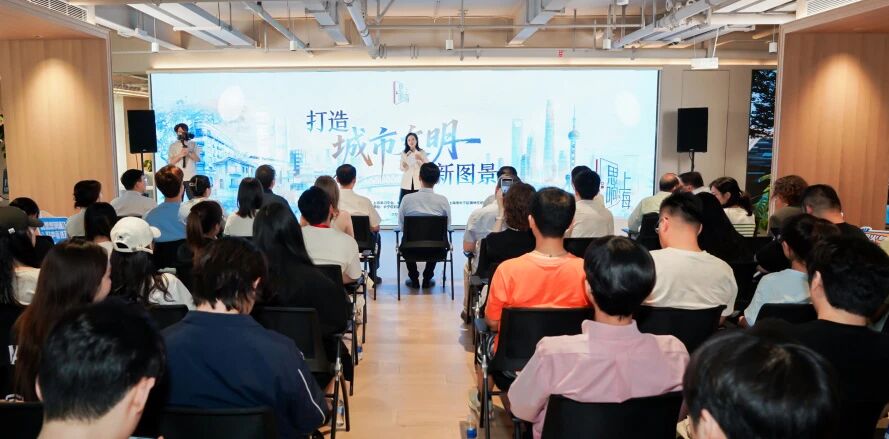
The event used the personal experiences and insights of Chinese and foreign residents as a starting point. Centering on the question “Why choose Shanghai? Why do you like Shanghai?,” it presented the Party’s innovative theories in plain language and from a grassroots perspective, guiding participants to understand and appreciate Shanghai-style urban civilization. At the same time, through face‑to‑face explanations of theories, interpretation of policies, responses to concerns, and building consensus, the event turned theoretical achievements into tangible, everyday happiness. This immersive, interactive approach to learning promoted both orthodoxy and innovation in theoretical study and publicity work, achieving tangible results.
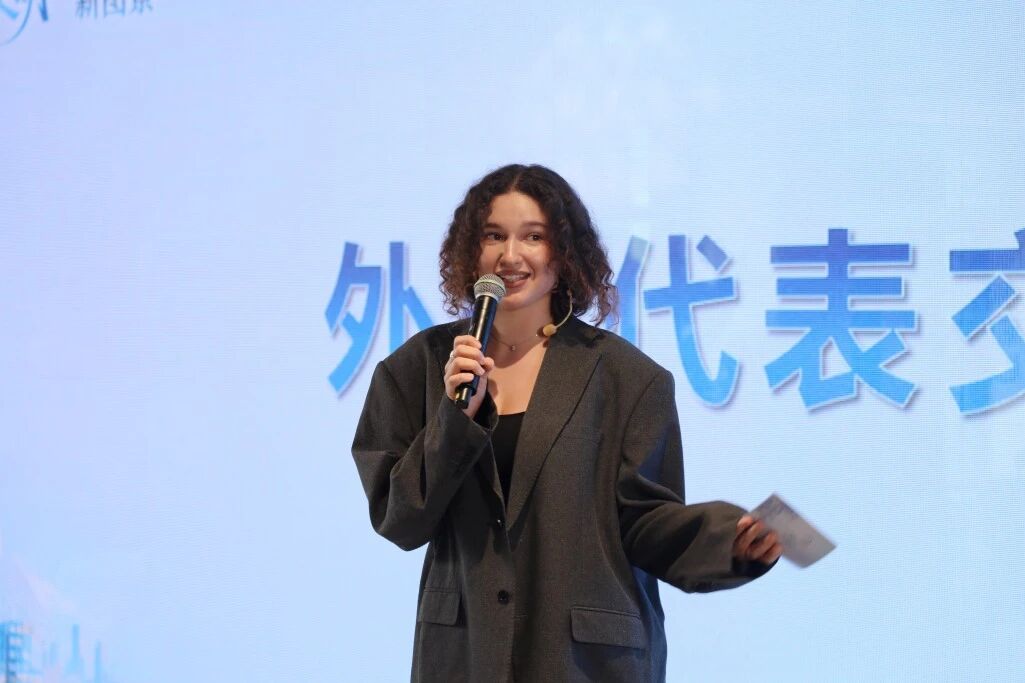
“The first impressions Shanghai gave me were order, safety and convenience.” At the event, Daryna, an international student from Belarus, shared her feelings about living and studying in Shanghai. She believes that “urban civilization” is not just about skyscrapers, but about mutual respect and kindness among people. In Shanghai, the streets are clean, transportation is convenient, and even strangers are eager to help with directions. Changning, she added, is a pioneer in the “15‑minute community living circle,” where many daily needs and services can be met in one place – truly convenient.
Afterwards, experts and scholars shared further insights on the theme of “urban civilization.”
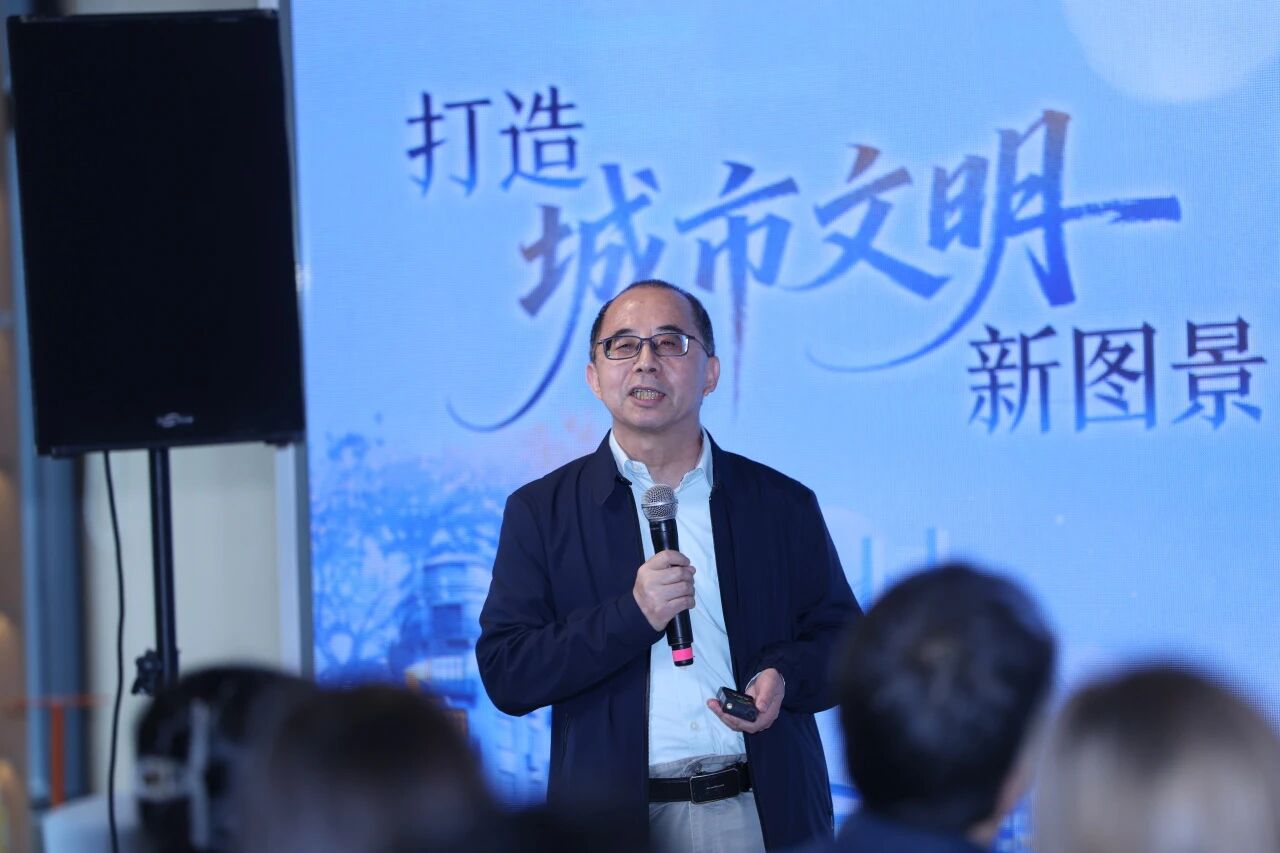
Liu Shilin, a professor at the School of Media and Communication and dean of the Institute of Urban Science, Shanghai Jiao Tong University, traced Shanghai’s history and culture to explain the relationship between “city” and “civilization” in an accessible way, guiding the audience to rediscover the “deep cultural structure” of “Shanghai‑style urban civilization.” Speaking about the future of a “civilized Shanghai,” he argued that further strengthening the research, interpretation and active utilization of Shanghai‑style urban civilization, providing more Shanghai models for the building of civilized cities, and offering China’s solutions with Shanghai characteristics for global urban governance should become important goals for the city’s development, as well as a spiritual consciousness for every citizen.
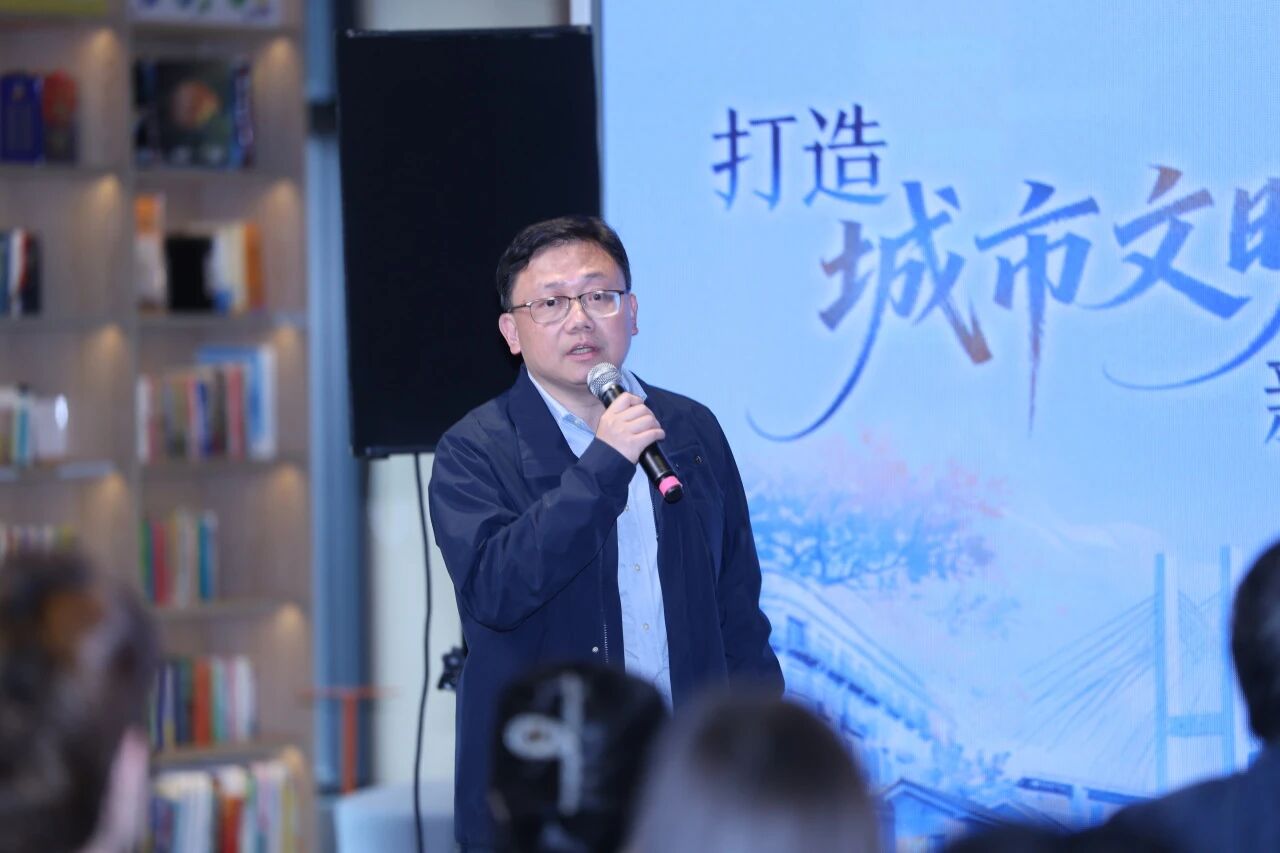
On the topic of urban renewal, Wang Jian, associate dean of the Shanghai Institute for Urban Renewal and Sustainable Development, Shanghai University, remarked, “Today, our urban renewal is shifting from ‘physical space renewal’ to ‘weaving social relationships’ and then to ‘nurturing the civilizational foundation.’ This shift reflects the real logic of current urban development.” He believes that keeping people at the core of the city, turning development achievements into tangible daily happiness, and enabling everyone to encounter their own warmth and beauty, is a vivid practice of the important concept of a people‑centered city, and also the enduring original aspiration and mission of urban renewal in the new era.
During the interactive Q&A session, participants engaged in lively discussions on various aspects of urban development, from safety, mixed‑use neighborhoods, and the “no‑leaf‑sweeping” policy, to cross‑cultural co‑governance and volunteer service empowerment. “How can we preserve a precious sense of daily life amid rapid modernization?” “Is the model of Chinese and foreign residents discussing community affairs together unique to Shanghai, or a replicable experience?” Every question and exchange during the thought‑provoking dialogue made the understanding of “urban civilization” more three‑dimensional and vivid.
Throughout the discussion, scholars and citizens also explored many new topics. One scholar suggested that the core of urban civilization lies not only in the completion of physical infrastructure but also in “cultural accessibility” for people from different cultural backgrounds. Balancing “universal equality” with “targeted services” and accommodating the different cultural needs of both Chinese and foreign residents represents a new challenge for Shanghai’s public cultural services and urban governance.
With the Xi Jinping Thought on Socialism with Chinese Characteristics for a New Era as its core and closely following the overall development of Shanghai, the event used a “two‑way interaction” between experts, scholars, and Chinese and foreign citizens to break through the “last mile” of theoretical publicity.