Citizens, enterprises experience Changning's digital transformation at digital center 发布时间:2026-08-21 信息来源:上海长宁
Citizens, enterprises experience Changning's digital transformation at digital center
Residents and business representatives explored cutting-edge digital applications and smart urban services during an open-house event at the Digital Changning Experience Center on August 13.
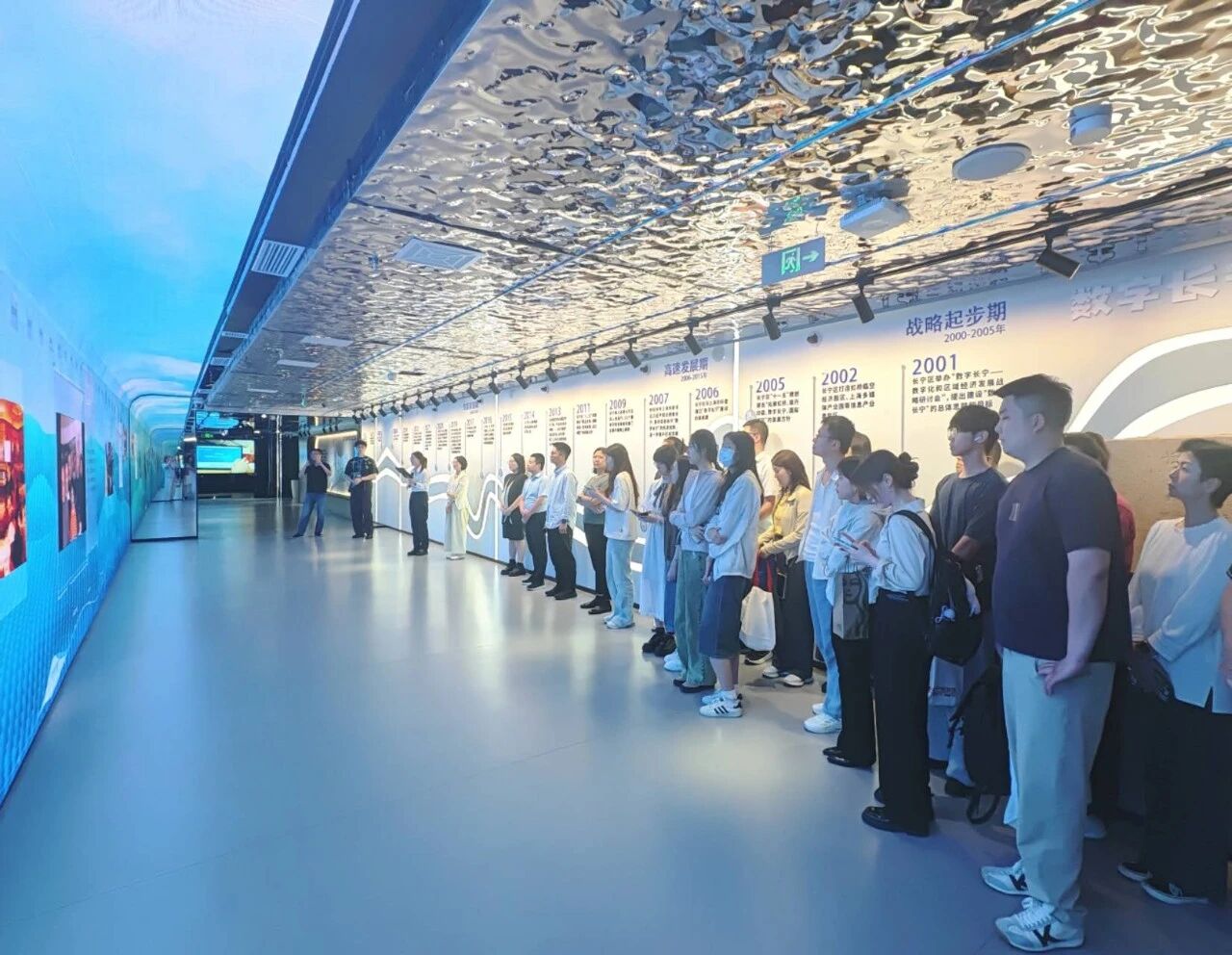
Hosted as part of Changning District's annual Government Open Month activities, the themed event invited the public and local enterprises to witness how digital technology empowers daily life, public governance and industrial innovation across the district.
With decades of accumulated digital development achievements, Changning features diversified, scenario-based digital practices. The Digital Changning Experience Center recently completed upgrades to two major exhibition zones known as "Digital Future" and "Digital Security."
The renovated space enhances immersive experiences through human-computer interaction, light-and-shadow visual effect and real-scene demonstrations, showcasing the district's latest intelligent upgrades.
In the "Digital Homeland" exhibition area, visitors observed and experienced digital applications covering government services, urban management and livelihood support. Many residents expressed surprise at how smart technology has integrated into everyday community life.
"I've never visited this center before. There are so many interactive displays worth exploring. I plan to bring my children to experience this digital venue pretty close to our neighborhood," a resident said. "We now realize these digital services are already around us and used in our daily lives."
Digital innovation has become a core signature of Changning, attracting a growing number of tech enterprises to settle and expand operations in the district.
Officially launched in November last year, the Shanghai Digital Public Service Center (Hongqiao Digital Valley) has emerged as a key platform integrating online digital services and offline physical support. The center offers 37 specific services across 10 major categories, including computing power, network support and data services, while serving as a showcase for local technological innovation achievement.
During the event, digital service staffers from multiple enterprises shared insights on AI-powered global business expansion and cloud computing solutions. The presentations allowed participating companies to access first-hand digital public service resources and connect with industrial trends.
The open-day activity allowed participants to experience the speed and warmth of Changning's digital transformation. Over the next five years, the district will further boost its digital economy through dual-driven development of data and algorithms.
Changning plans to embed digital scenarios within the 15-minute community living circle, upgrade digital urban governance systems, and strengthen new digital infrastructure to consolidate the foundation of smart city development.
Local tech enterprises expressed confidence in future collaborative growth.
"Based on our technological strengths and matching the district's digital scenario demands, we will keep growing hand in hand with 'Digital Changning,'" a corporate representative said.
Hongqiao salon delivers practical guidance for firms expanding globally
Industry experts, enterprise representatives and investment professionals gathered at a business salon in Hongqiao recently to share practical solutions for Chinese companies navigating overseas expansion.
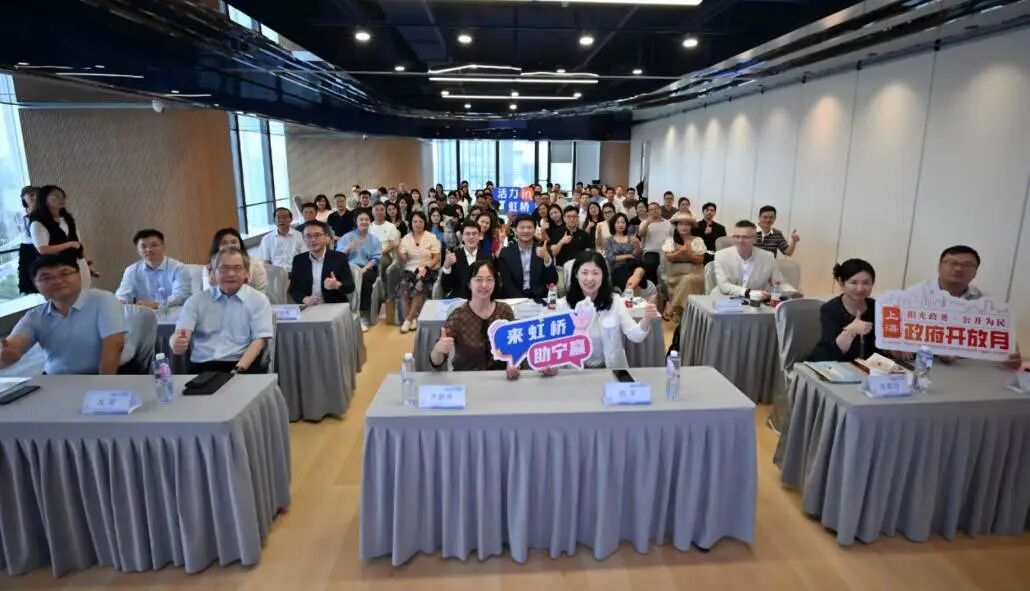
The Hongqiao afternoon salon focused on core challenges confronting outbound enterprises, including compliance management, tax planning and cross-border finance. The event aimed to integrate multi-industry resources, resolve real operational bottlenecks and support enterprises in building stable global layouts.
Changning District Commerce Commission updated attendees on the development of the Hongqiao headquarters cluster for outbound enterprises. Hongqiao Subdistrict officials introduced the area's optimized business environment and tailored enterprise service policies.
Industry professionals worldwide shared targeted insights on global expansion trends, national market policies, compliance certification, tax structure optimization and cross-border financial operations.
"Overseas expansion is a key development direction for Changning District," said Pang Yang, an academic consultant. "Events that gather cross-field expertise are extremely valuable. Collisions of experience from different sectors help enterprises comprehensively recognize overseas markets and tackle complex challenges."
Wang Yaozhen, a legal practitioner with years of experience serving German-market businesses, said global expansion is an inevitable trend for growing Chinese enterprises.
"Overseas markets have many hidden pitfalls for new entrants," Wang said. "Face-to-face exchanges allow us to pinpoint corporate demands accurately, helping businesses avoid unnecessary risks and expand overseas smoothly."
The interactive session covered every key procedure of cross-border operations. Corporate representatives raised questions based on their overseas layout plans and conducted in-depth discussion with experts. Changning District Human Resources Public Service Center set up an on-site booth to provide supporting human resource services for outbound enterprises.
"The salon offers clear and actionable references for our future global development strategy," a participating company representative said.
Hosted as part of Changning government open month series, the activity marks a key effort to serve market entities.
Hongqiao Subdistrict will provide one-on-one butler-style follow-up services for all demand collected during the salon. Authorities will continue to improve the local service ecosystem for outbound trade, empowering more local enterprises to expand steadily and sustainably in global markets.
Rain transforms century-old Zhongshan Park into picturesque ink-wash painting
Continuous summer rain has draped Shanghai's century-old Zhongshan Park in serene, misty beauty, turning the historic urban green space into a living Chinese ink-wash painting.

Gentle drizzles linger over the park, bringing refreshing coolness that dispels summer heat. The steady rainfall washes away urban noise, leaving only the soft rustle of raindrops slipping through dense leaves and branches.
Few visitors wander the paths on rainy days, granting the park a rare sense of peace. The vast lawns are damp and soft after the rain, saturated with fresh water that bounces gently under footsteps. The wet grass exudes a pure, vibrant vitality unique to rainy summer days.
Wildlife brings movement to the tranquil landscape. Fish swim freely in the glistening water ponds, while crisp bird songs echo through the woods. Unfazed by passing visitors, local birds flutter short distances along the walkways, hopping and chirping playfully amid the lush greenery, claiming the rainy park as their peaceful domain.
Deeper inside the park, layers of rich greenery stretch as far as the eye can see. Centennial camphor trees form thick, overlapping canopies that block most falling rain. Beneath the towering trees, the air is filled with the fresh, earthy scent of damp soil and foliage. The quiet woods embody the classic Chinese poetic mood: birdsongs make the mountains feel more serene.
Rain-washed paths lead visitors past timeless park landmarks. A 700-year-old ancient stone bridge stands silently over the flowing water, witnessing the slow drift of clouds and streams. Old plane trees, with sturdy, weathered branches, shed aged leaves in the rain, standing tall to greet streams of occasional passersby.
Scattered visitors stroll leisurely through the scenery, each seeking a moment of quiet refuge.
As rain fades and summer heat dissipates completely, Zhongshan Park offers a perfect escape from the bustle of city life. The quiet rainy landscape allows visitors to slow down, relax their minds and reconnect with a peaceful inner self amid the time-honored greenery.
SiliconAlley Shanghai forum explores industrial collaboration for computing power development
About 70 representatives from startups, listed companies, investment institutions and industry experts gathered in Changning District on August 15 for a specialized industry forum focusing on computing power industrial chain collaboration.
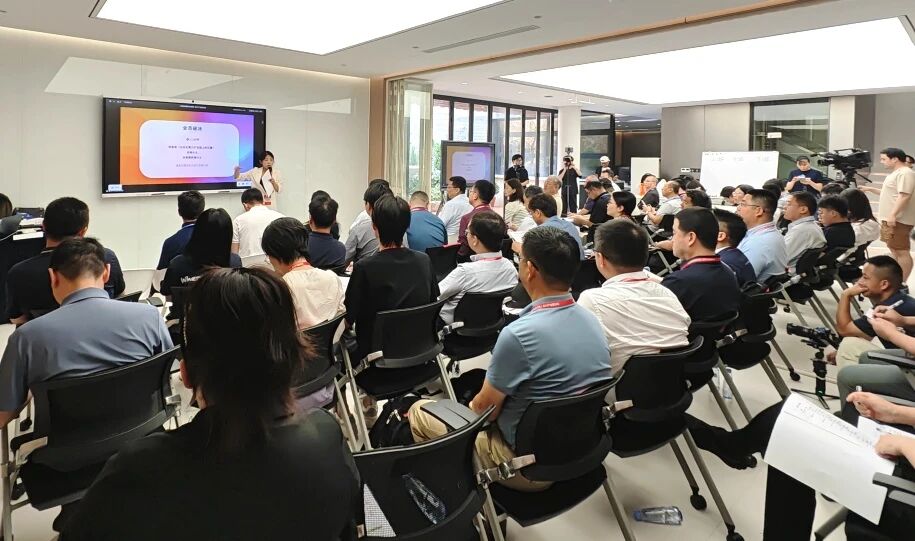
Hosted under the SiliconAlley Shanghai Hardcore Co-creation Camp, the event aimed to unlock new development paths for the city's computing power sector through resource integration and cross-industry docking.
Twenty-six high-quality tech projects participated in on-site roadshows covering the entire computing power industrial chain. The showcased projects span upstream core hardware sectors including AI chip design, semiconductor equipment and materials, advanced packaging and liquid cooling heat dissipation technologies. Midstream businesses focus on intelligent computing server integration, while downstream businesses cover AI application software, industrial simulation, embodied intelligence and edge computing terminals.
After the roadshow sessions, startup representatives conducted in-depth group discussions guided by senior industrial mentors to refine project positioning and cooperation models.
He Dian, co-founder of startup Clussys, which specializes in high-speed interconnected data technology, said the company has established partnerships with China Unicom and Ant Group.
"We hope to connect with listed company resources through this event, explore localized deployment cooperation in vertical sectors and accelerate the popularization of computing power technologies," he said.
Lu Zhengyang, director of Gettop Acoustic Co, shared the company's industrial layout covering nearly 100 semiconductor enterprises, with ongoing expansion into new materials and optical communication sectors.
"We look forward to investment, merger and synergy cooperation with startups," Lu said. "As a listed company, we can provide solid industrial carriers for product manufacturing and landing demands."
The forum featured insightful keynote speeches from industry leaders.
Cen Fukang, deputy Party secretary of Changning District, said the event gathered high-end talent, cutting-edge technologies and industrial capital in the computing power field, presenting high-value dialogues covering experience sharing, investment analysis and project docking.
"Changning is building itself into a hub for digital intelligence economy and innovation and entrepreneurship," Cen said. "As a core driver of new quality productive forces, computing power has become a key engine enhancing urban competitiveness. We will unite all parties to promote high-quality development of the computing power industry."
Reading ceremony explores civilization, urban development and future of Shanghai
Top scholars shared insights on urban heritage, cultural civilization and high-quality urban growth at the third "Fragrant Changning • Oriental Reading Ceremony" held at Changning District Library on August 15 during the Shanghai Book Fair.
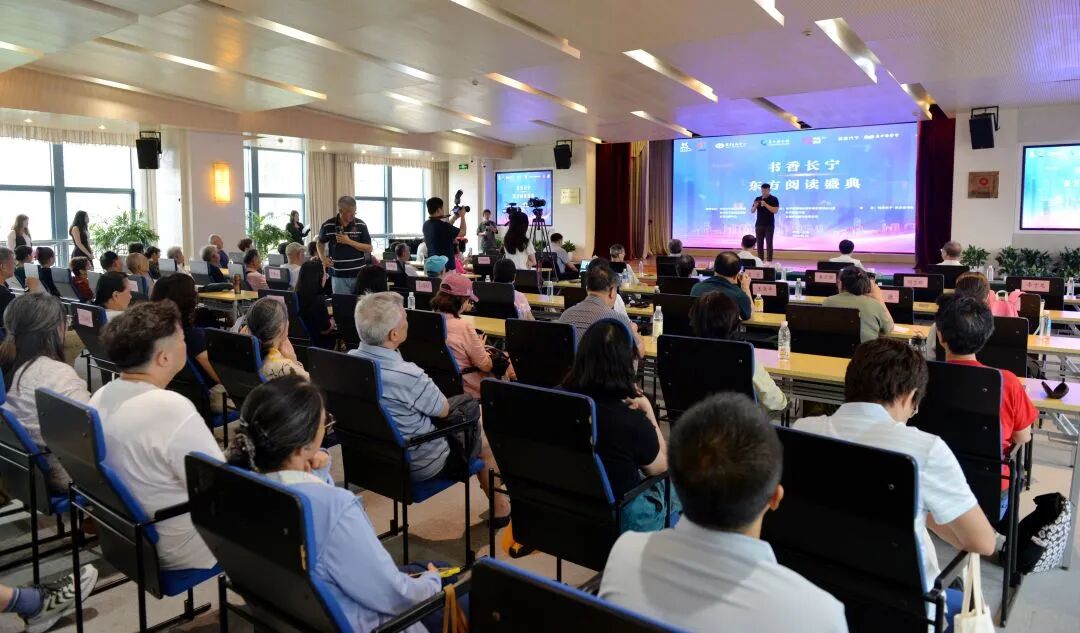
The event gathered about 120 readers of all ages for themed lectures centering on how culture and reading shape Shanghai's urban context and future development. Three distinguished researchers delivered keynote speeches covering global urban strategy, archaeological civilization and modern cultural evolution.
Ruan Qing, standing committee member of the Shanghai Municipal Committee of the Chinese People's Political Consultative Conference and dean of the Shanghai Global Urban Research Institute, analyzed Shanghai's high-quality development from a global city perspective.
Ruan said Shanghai should renovate traditional industries, expand advantageous emerging sectors and actively lay out future industrial tracks to maintain dynamic growth. As the leading city in the Yangtze River Delta, Shanghai needs to leverage its strengths in basic research and fill gaps in disciplinary development, platform construction and evaluation systems to enhance regional innovation influence, he added.
Chen Jie, deputy curator of the Shanghai Museum, presented Shanghai's 6,000-year civilization timeline through archaeological discoveries.
Archaeological findings including Majiabang, Songze and Liangzhu cultural relics prove continuous human civilization along Shanghai's water network dating back to prehistoric times, Chen said. The excavated sites restore scenes of ancient settlement, cultivation and cultural creation, turning fragmented historical records into tangible urban heritage.
He emphasized the value of transforming archaeological achievements into public cultural resources. Activating historical relics allows history to speak for itself and strengthens Shanghai's cultural confidence and urban soft power during urban renewal.
Shen Jie, researcher at the Institute of History under the Shanghai Academy of Social Sciences, reviewed how reading culture molded modern Shanghai.
In the early 20th century, concentrated publishing institutions made Shanghai the center of China's modern book industry. Prosperous newspapers and periodicals turned the city into an important birthplace of progressive ideological trends. By the 1920s and 1930s, Fuzhou Road's cultural block formed a mature cultural and commercial ecosystem that gathered talent and boosted creative vitality.
The ceremony included a book donation session. Officials presented books to eight reader representatives to promote public reading and cultural education.
"Compared with digital screen interaction, face-to-face communication with scholars brings deeper reading experience and spiritual fulfillment," said Zhong, a junior high school student who attended the event for the second year. “Physical books deliver unique warmth and help me relax and cultivate temperament. I hope more such public cultural events will be held in the future."